Upper Garden

Go to the Lower Garden

Upper Garden

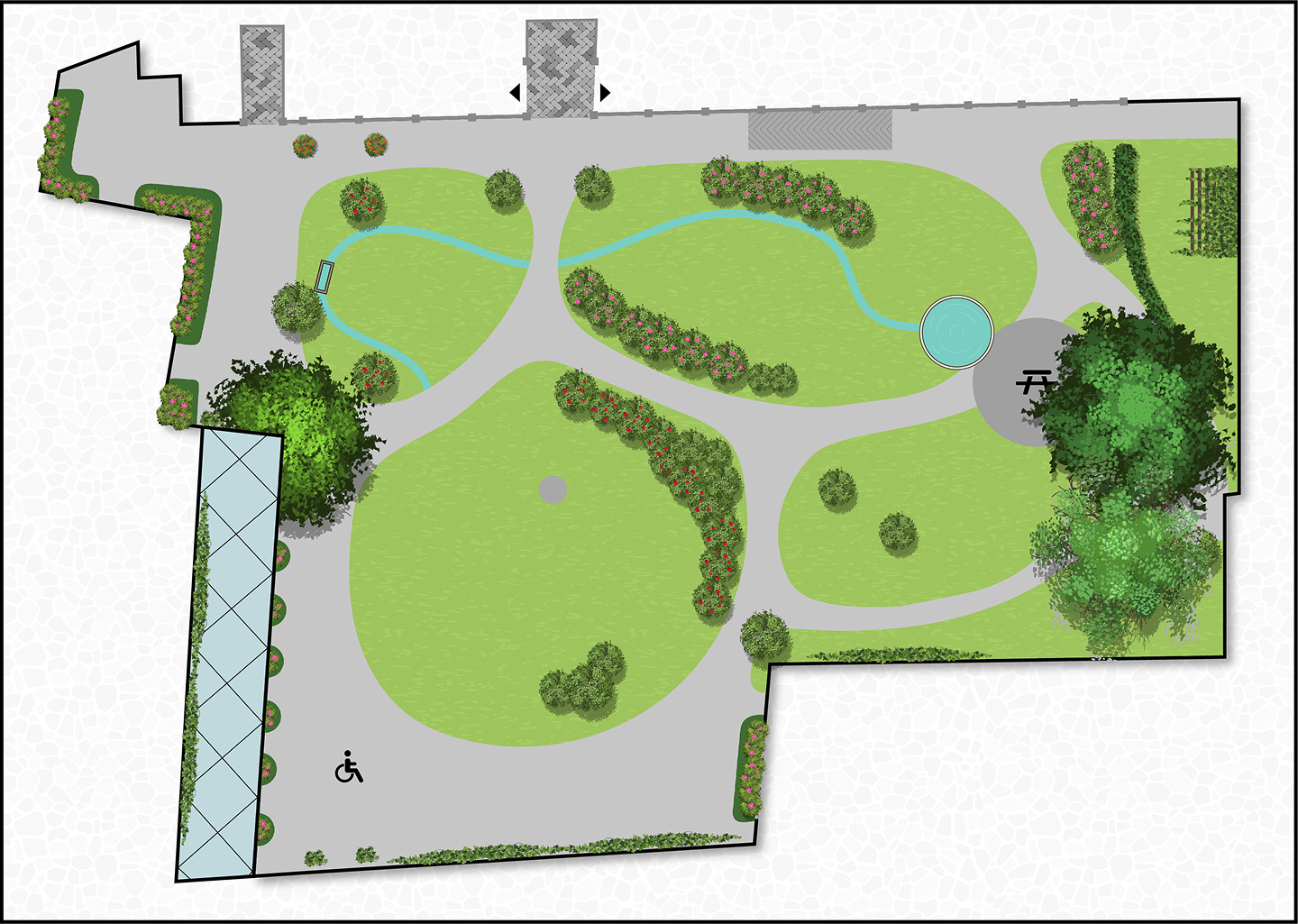
As soon as you step into the garden, curiosity draws you to the balustrade to gaze out from the terrace. Only afterward do you notice that the platform you’re standing on is framed by the three wings of the palace. Dark gravel paths outline green lawns with soft lines and asymmetrically arranged flower beds brighten the scene. A small stream crosses the lawns and flows into a pond filled with aquatic plants.

Ficus Repens and the Glass Greenhouse
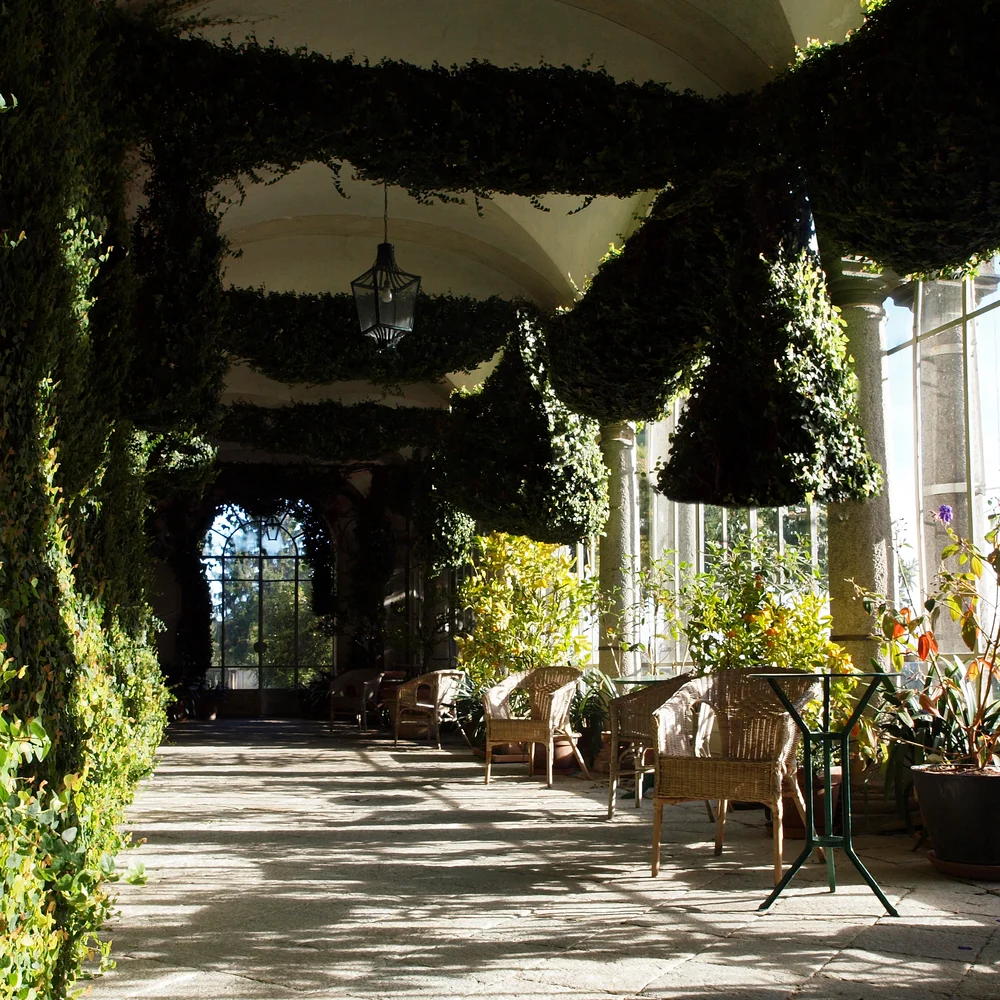
The space we now call the greenhouse was originally built as a portico in the 18th century. In the mid-19th century, five Ficus repens plants were planted at the base of the inner wall, and over time, their foliage has come to decorate the entire space. The right wall is uniformly and neatly covered, resembling wallpaper. Eight garland-shaped festoons hang from side to side across the ceiling, dividing the greenhouse along its entire length, while at each pair of columns, green bell-shaped cascades of foliage descend gracefully.

Family memories - Photo of the Marquises Marianna and Marialuisa in front of the ficus repens
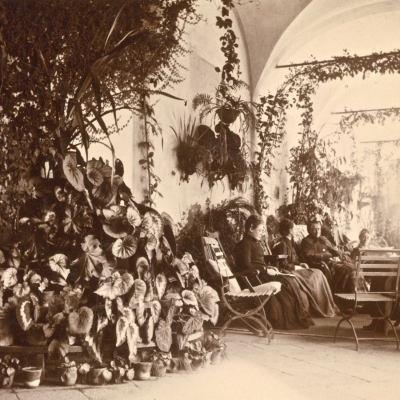
This photograph from the mid-1800s gives us a glimpse of everyday life in the greenhouse of yesteryear. The photo shows a group of ladies in the greenhouse engaged in sewing, among whom we can recognize the Marquise Marianna (1799–1870) and Marialuisa (1847–1927), great-great-grandmother and great-grandmother of the current owners.

At the time, the ficus repens that now covers the left wall was just beginning to grow, while in the foreground, a collection of begonias is elegantly arranged on a vintage pot stand, still in use today, a silent witness to over a century of history.

I vialetti e la ghiaia

The pathways cross the upper garden, dividing it into different areas and allowing it to be fully explored; the irregularly shaped lawns stand out even more thanks to the contrast between the dark blue gravel and the green of the grass. The current appearance of the paths is the result of a restoration intervention: around the 1970s, some parts had been incorporated into the lawn and were later redesigned and rebuilt thanks to PNRR funding.
The very dark, fine-grained gravel has always been a characteristic feature of the historic gardens of the Biella area. It once came from a quarry in the nearby locality of Favaro, which is no longer active today. To preserve the original appearance, the gravel now comes from the Bergamo area

The Stream

Thanks to PNRR funding the stream in the central part of the garden, once fed by a now-deactivated hydraulic system, flows again. In addition to restoring the original section, a new one has been created, extending to the historic basin located 20 meters ahead, in the direction of the Tower

The Basin and Circular Area

For many years, the garden’s basin remained hidden by surrounding vegetation and without water. During recent restoration work, it was brought back into operation. The edge, made of faux rock using the “rocaille” technique, is the same used to decorate some flowerbeds and the central niche of the nymphaeum.

Family memories - The paniculata hydrangea and Aunt Raffaella
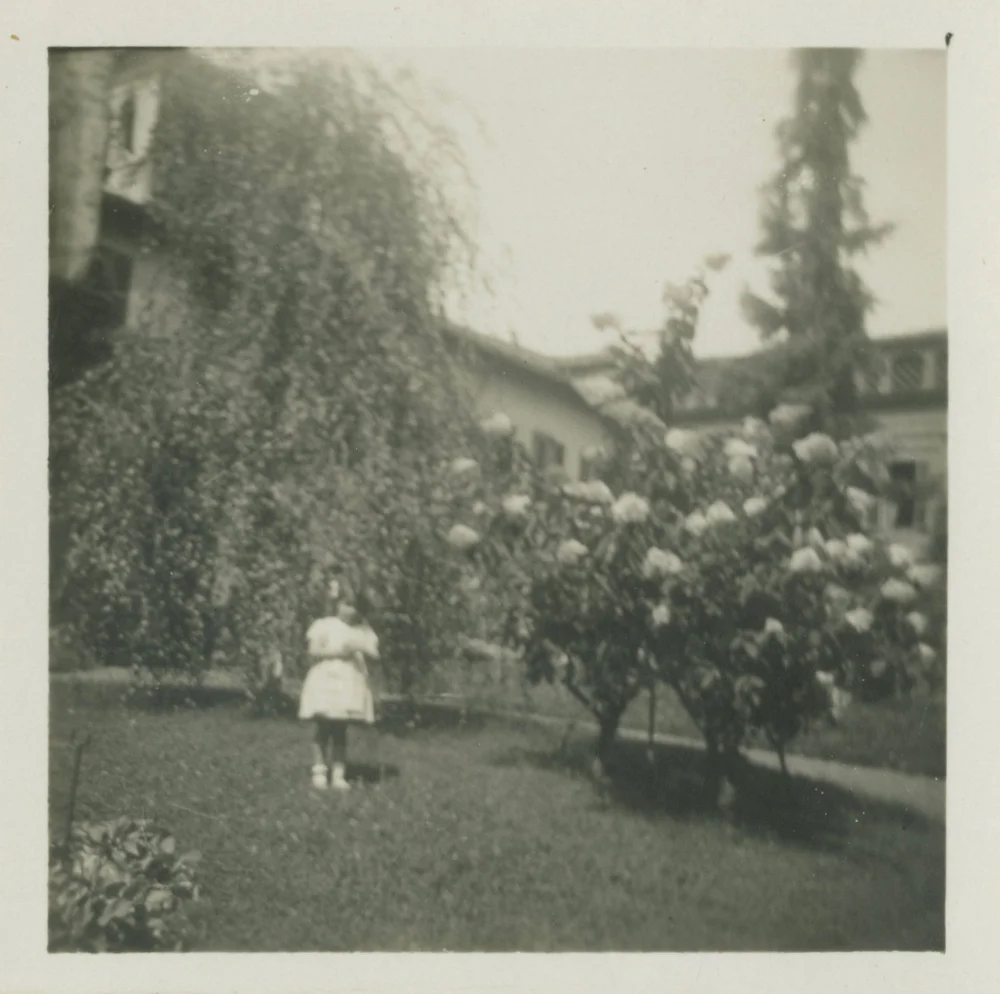
This paniculata hydrangea is a long-lived shrub, albeit modest in size, and is the very same one that appears in bloom in the 1908 photograph. The little girl is Raffaella, aunt of the current owners: born in 1902, she took her vows in the order of the Franciscan Missionary Sisters of Mary and spent most of her life in Brazil. She died in 1978 at the age of 75.

Family memories – eight shrubs for a memory
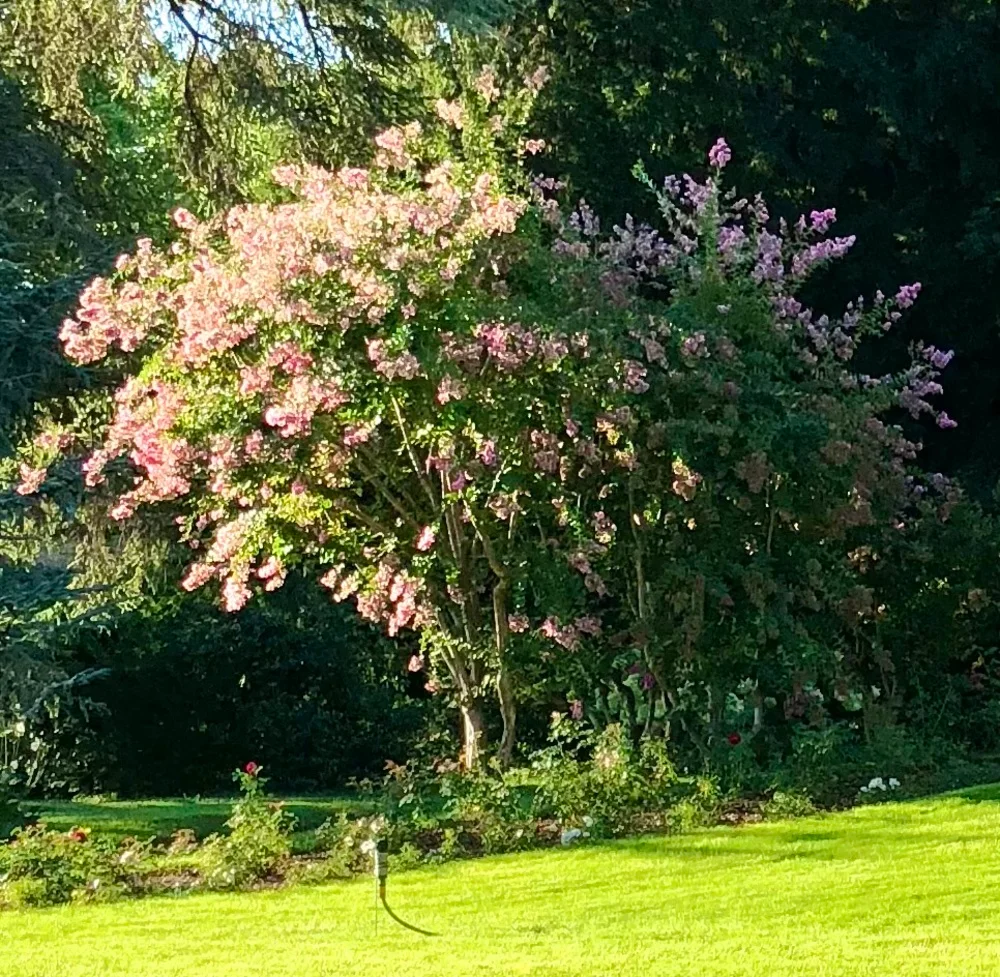
In 1918, the Alberti La Marmora family was struck by a great tragedy: Mario, the grandfather of the current owners, died suddenly at the age of 49 from the Spanish flu. At that time, the lagerstroemias were in full bloom, and his son Guglielmo decided to plant these eight shrubs in his memory.

Family memories – the medlar tree

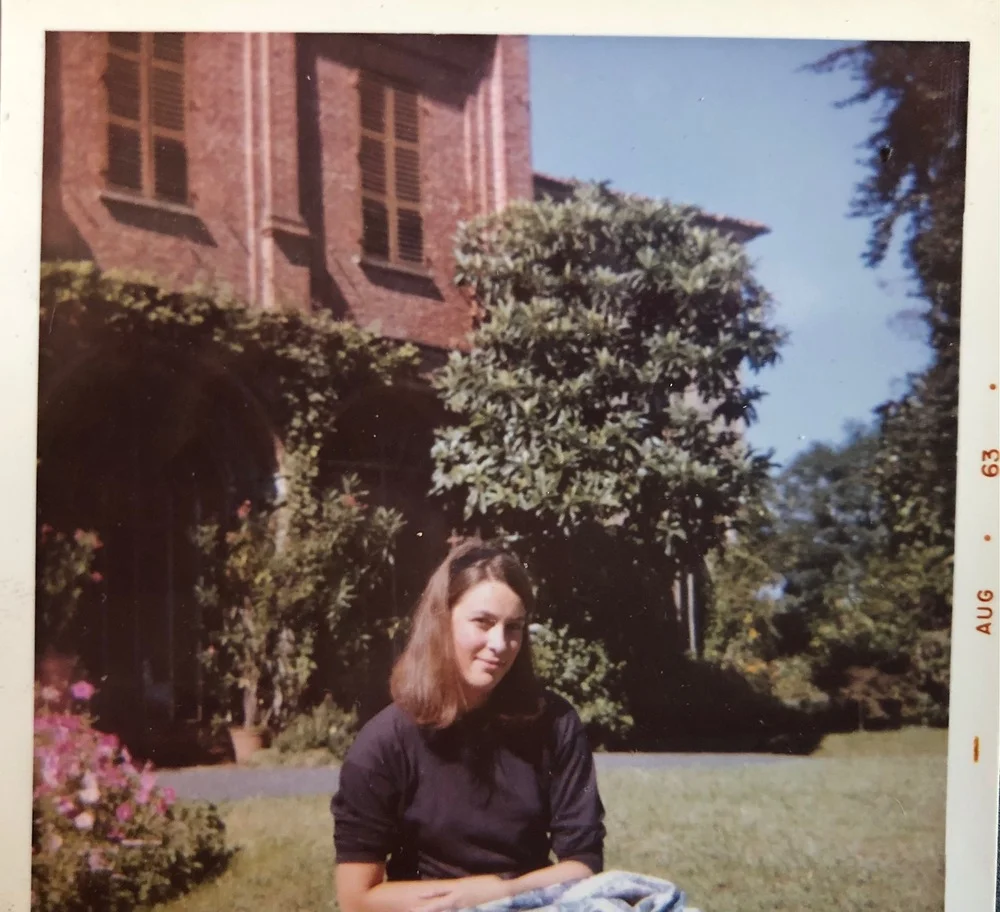
This photograph, taken 62 years ago, shows Giulia Benedetta, sister of the current owner, with a medlar tree behind her. The tree grew spontaneously in an unusual spot near the wall, where a gardener would never have planted it. Yet it found its place and today grows luxuriantly, becoming an important feature of the garden.

Family memories – The rose bed

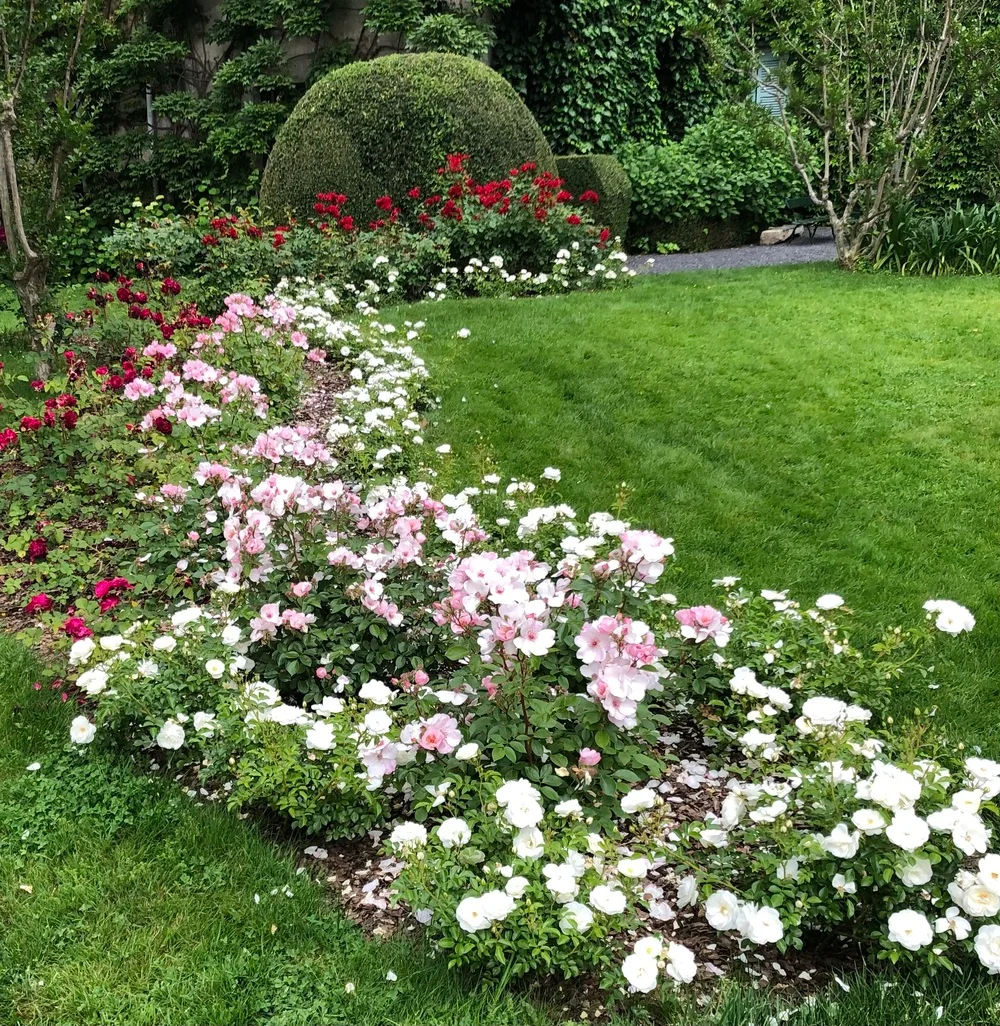
On the shorter side of the flower bed grow red roses planted in the 1950s by Guglielmo Alberti La Marmora, which are distinguished by their robustness and almost continuous flowering throughout the year. On the longer side, his son Francesco added three varieties of roses in 2018: in the center, Astronomia with simple pink flowers; on the left, the taller Munstead Wood with globular crimson flowers; and along the edge, toward the lawn, Innocentia with elegant white flowers.

The Terrace

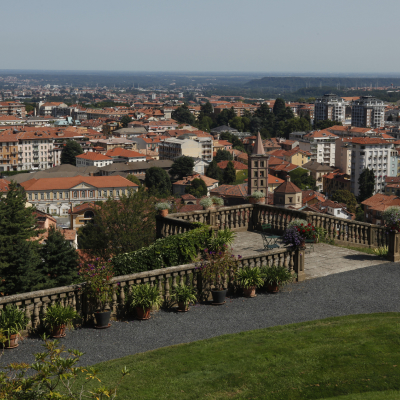
As soon as you step into the garden, the instinct is to move toward the open side overlooking Biella: sixty meters marked by a balustrade, where a terrace extends into the void. This terrace forms the roof of the nymphaeum below. Thanks to PNRR funding, the entire balustrade has been reinforced and restored, while the worn-out concrete paving has been replaced with new stone flooring.

The octagonal tower of Sebastiano Ferrero
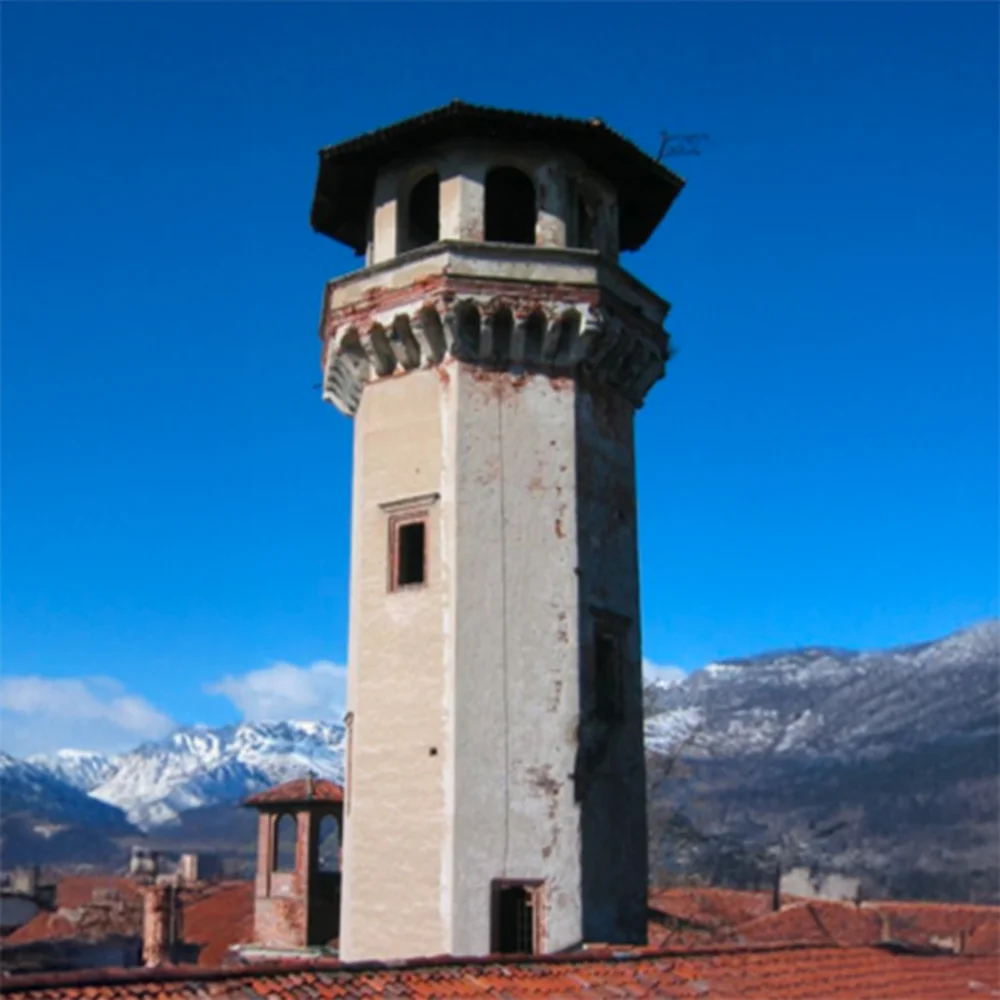
Sebastiano Ferrero, ancestor of the current owners, was appointed “General of Finance” in 1499 by King Louis XII of France and, confirmed by Francis I, held that position until 1520, when French rule over Lombardy, part of Piedmont, and Liguria came to an end. The historian Litta wrote that Sebastiano built this tower to see Milan: visible from most of the province, it has become a landmark of the Biella area. You can recognize the tower in the 17th-century fresco in the Sala dei Castelli, which depicts the city of Biella surrounded by the 36 fiefdoms of the family. The tower is currently not open to visitors.

The Altana

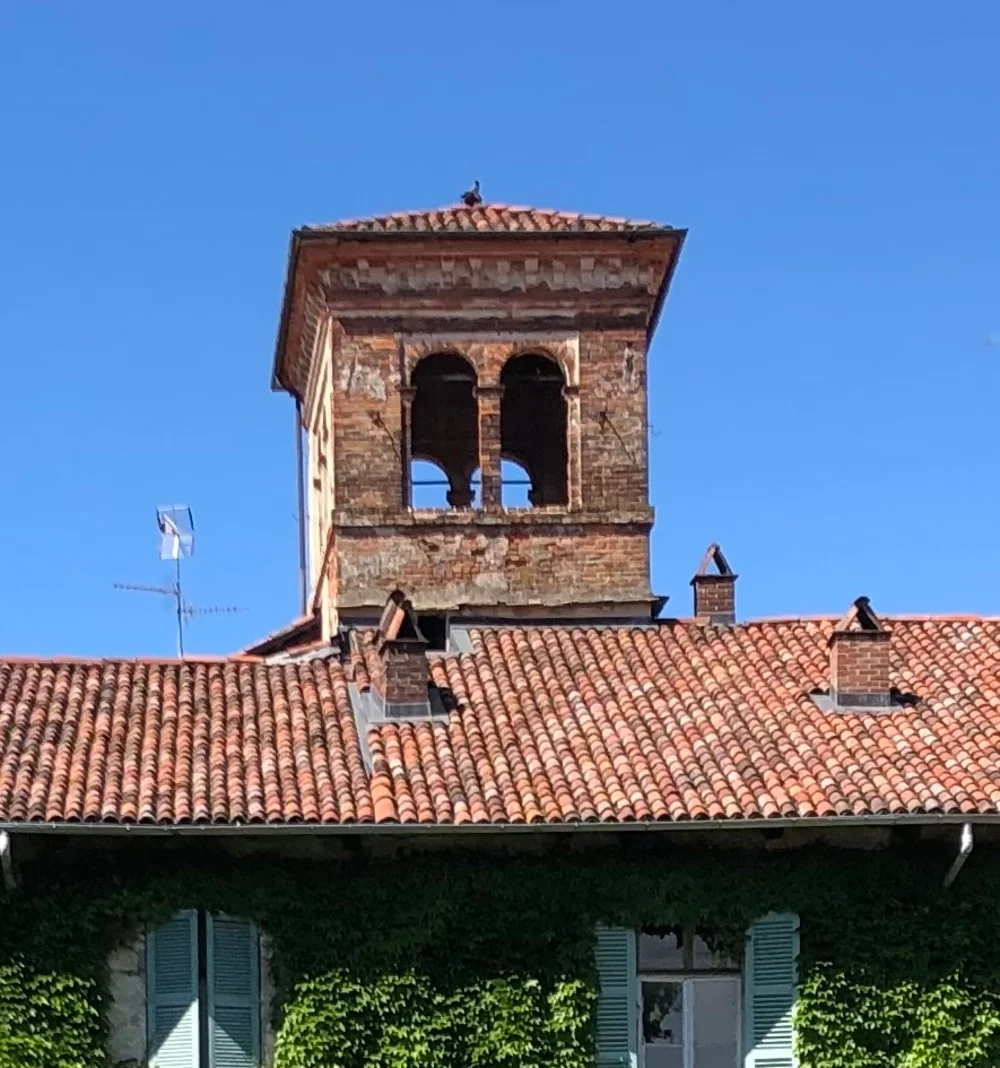
An “altana” is a turret that rises not over the void but above the roofs of a building.

The view from the “Altana” is truly breathtaking: from the 12 arches, you can see the palace and its garden from above, the city of Biella, and thanks to the information panels, you can recognize the various elements of the landscape, from the mountains to the villages on all four sides of the horizon. It is accessed from the entrance courtyard of the palace, climbing three flights of stairs, with the last two flights slightly narrower.