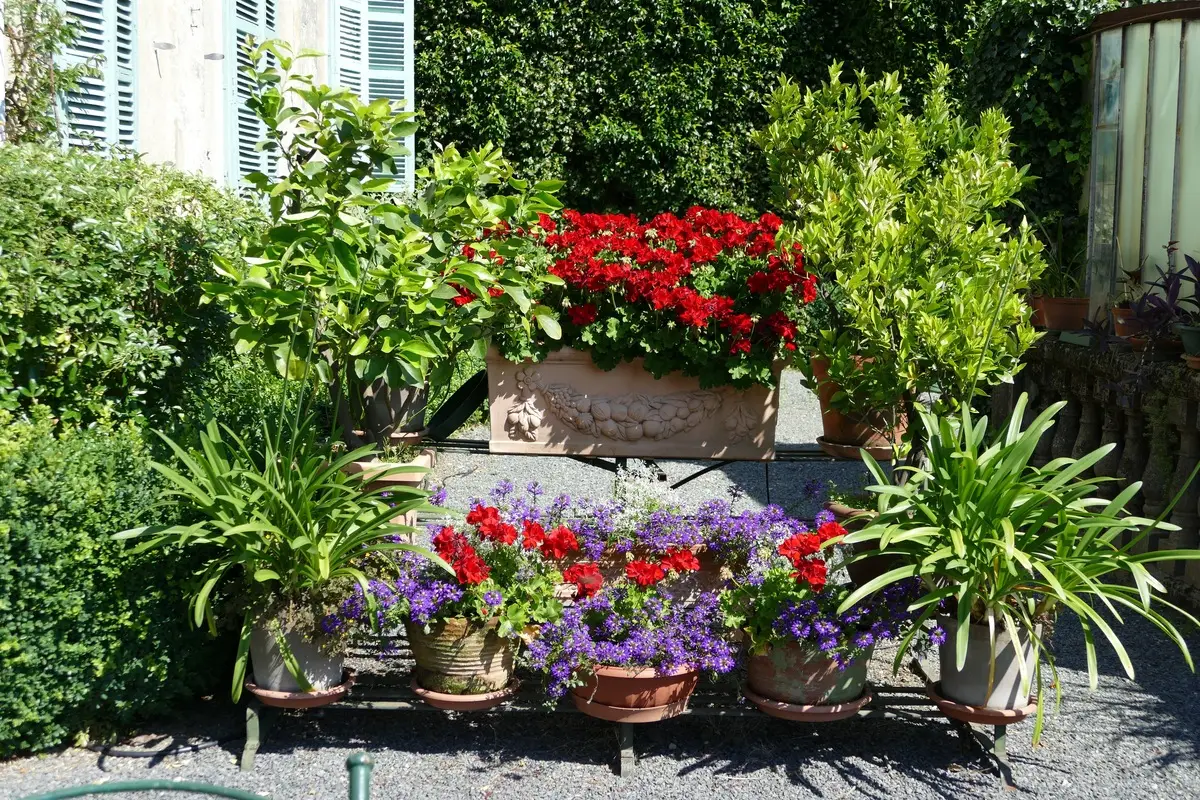
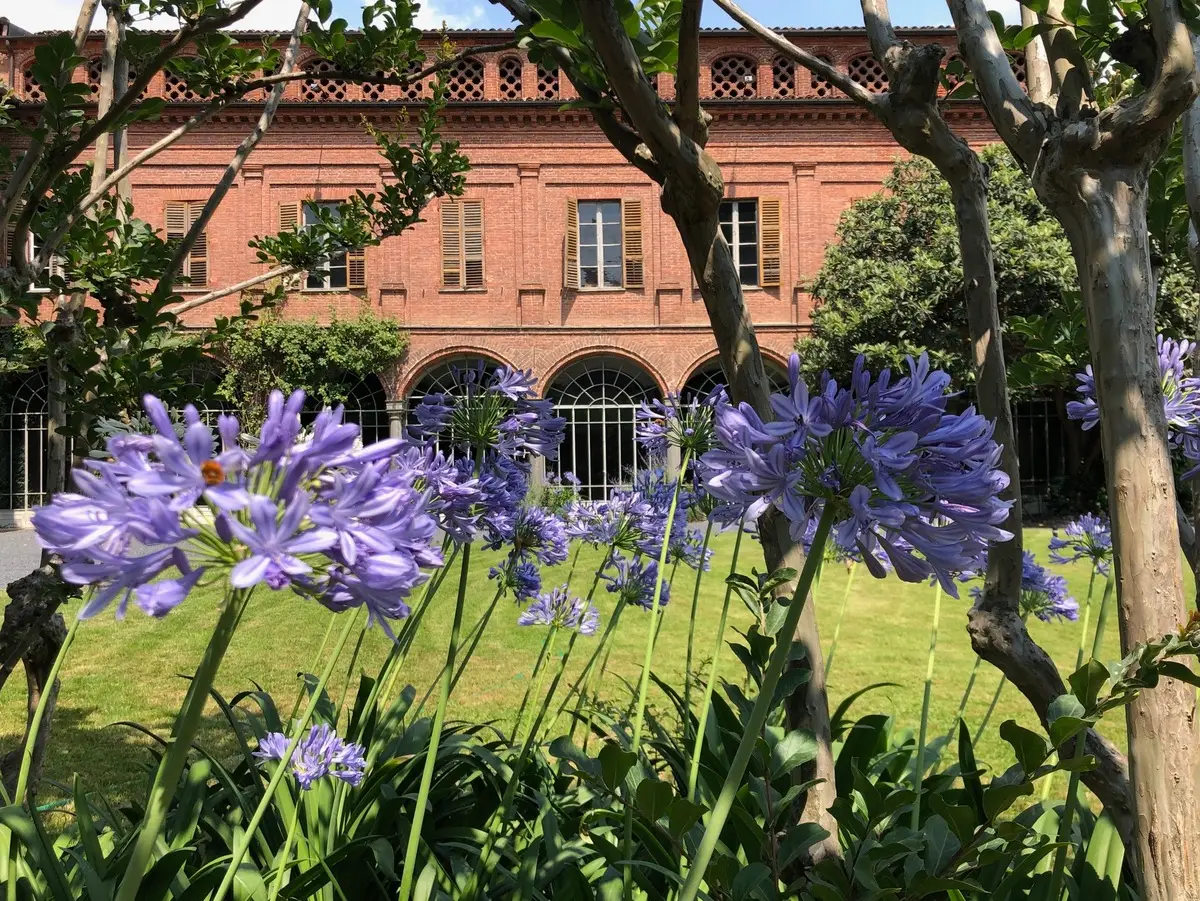
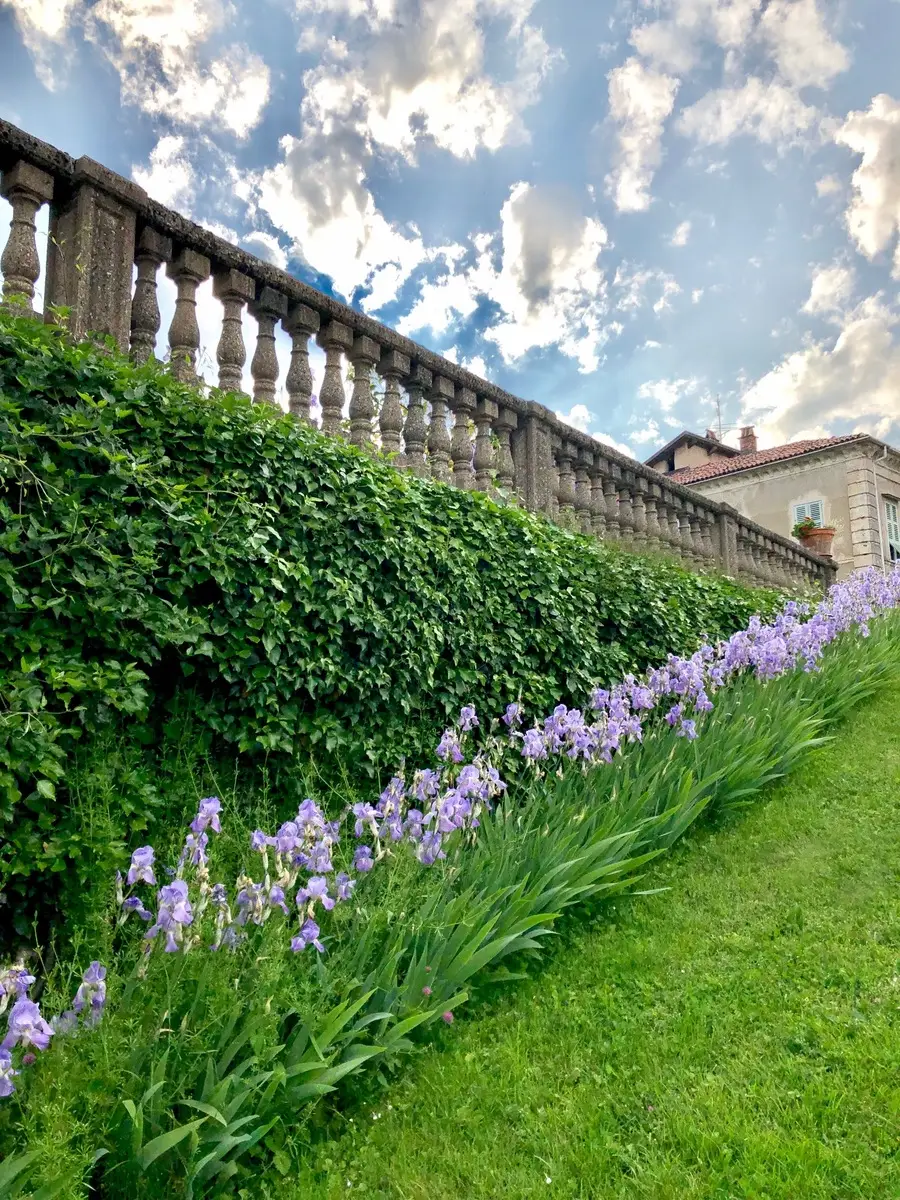
Today, the upper garden is decorated with potted annual plants and flower beds of perennial plants; this is the result of a and evolution. In the 19th century, housed numerous potted plants and flower beds with annual flowers, while originally it was decorated with hedges, shrubs, and citrus trees.
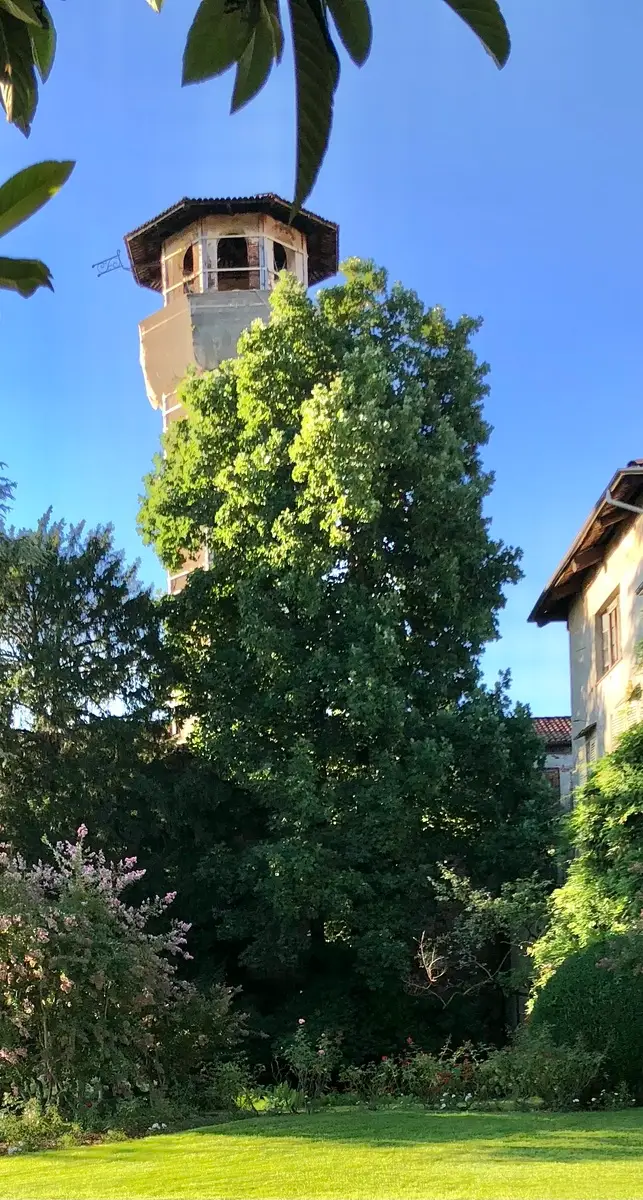
Tall trees
Our garden can be taken in at a single glance: historical documents reveal that in the 19th century, numerous trees were planted, which would later grow very large and played a dominant role until 1982. Since then, the large trees that have fallen over the years have not been or substituted with the aim of restoringl’ garden to its original and appearance of a or terrace protruding towards the horizon. Today, only fourremain.
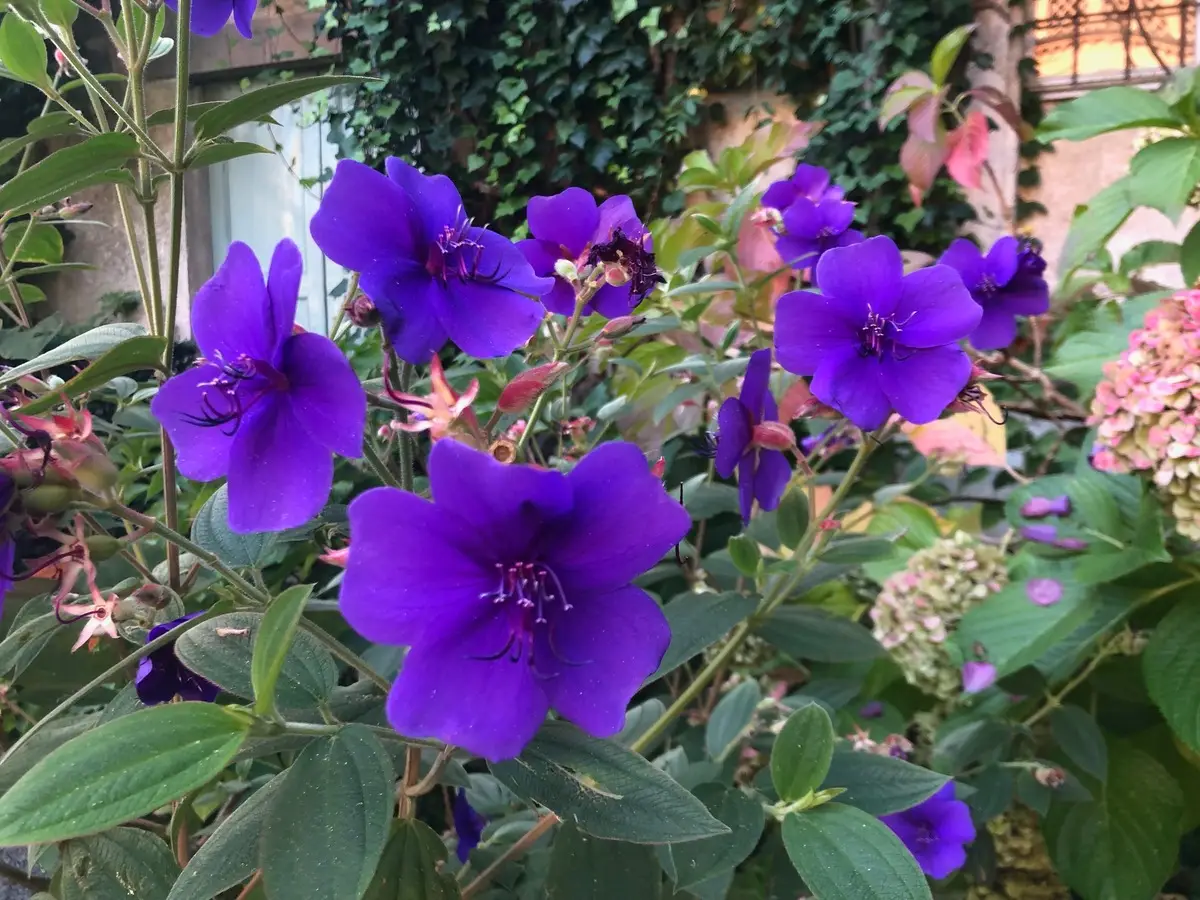
In the garden, you will find historic shrubs planted in the last century, others chosen in the 1990s by Francesco and Silvia Alberti La Marmora, and a new addition near the terrace!
From the point of view of blooms, there is a big difference between the upper garden and the lower garden.
The upper garden has always been decorated: initially with hedges, shrubs, and citrus trees, then,since 1800 with numerous annual flowers in pots, and more recently also with borders of perennial plants. In the latest intervention, new flowerbeds were added, interacts with the existing ones.
The lower garden, on the other hand, has maintained until today a more classic appearance typical of Italian garden, where geometric lines and shapes prevail. Here, the walls slope gradually from the first to the last ramp, and , which enhance their symmetry.
Climbing plants
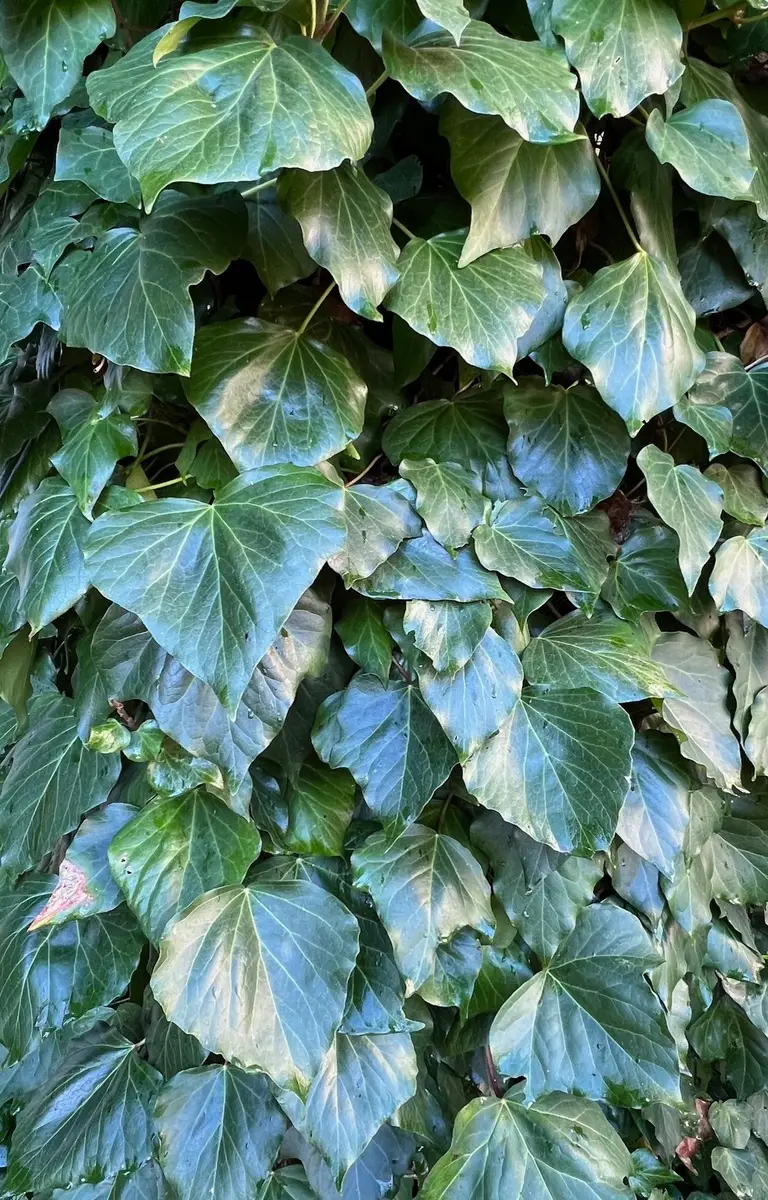
In the upper garden, climbing plantsand are the stars of the show: from the hundred-year-old ficus renpens, which decorates the greenhouse, to the varieties that cover the walls of the palace overlooking the garden.
Until around 1960, summer flowers consisted mainly of annuals that were grown by the gardener the palace and replanted every spring for the summer cycle. During the 1970s, the flower beds for annual plants were gradually removed and the decoration was reduced to roses, few shrubs and few pots. In the mid-1980s, Francesco Alberti La Marmora, the current owner, began to create a perennial flowerbed, gradually introducing new varieties over the following years, which now number more than 50.
Annual plants
Annual plants have a single-season life cycle although they can be placed grown in flower beds, at Palazzo La Marmora they are mainly used for pot arrangements, in which we use the same composition with the same three colors in all pots.
The “English border” is a flower bed dedicated to perennial plants, which bloom year after year. Their design requires careful consideration: plants must be arranged taking into account their height, flowering period, and color. The composition often includes small shrubs and annual plants to enrich the overall effect.
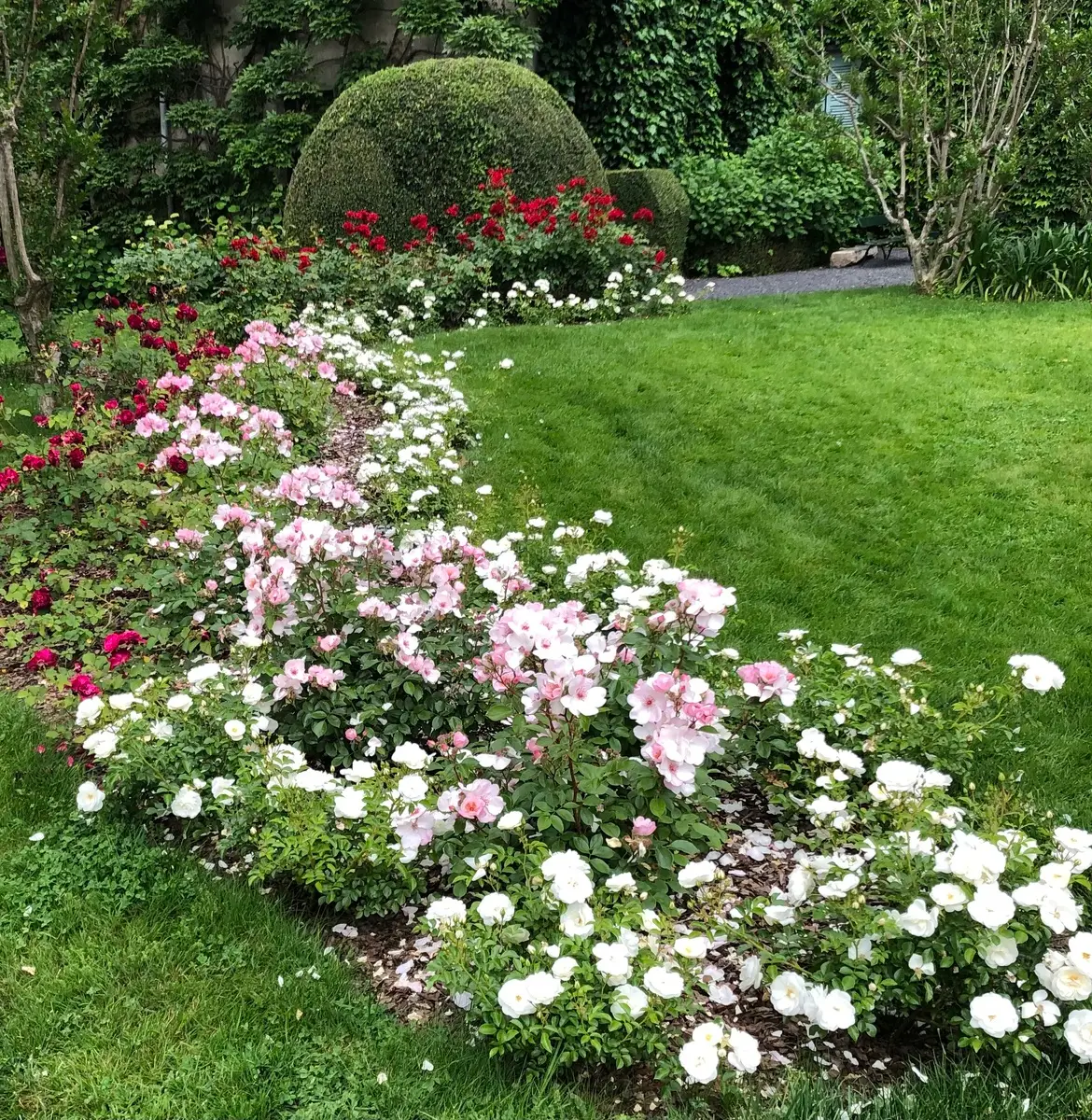
Both bush and climbing roses were planted in two separate periods: some varieties date back to the 1950s, while others were introduced in 2018. Among these, the Astronomia stands out with its simple pink flowers in the center, the Munstead Wood on the left, taller and with globular crimson flowers, and the Innocentia with elegant white flowers bordering the flowerbed towards the lawn.
Aquatic plants
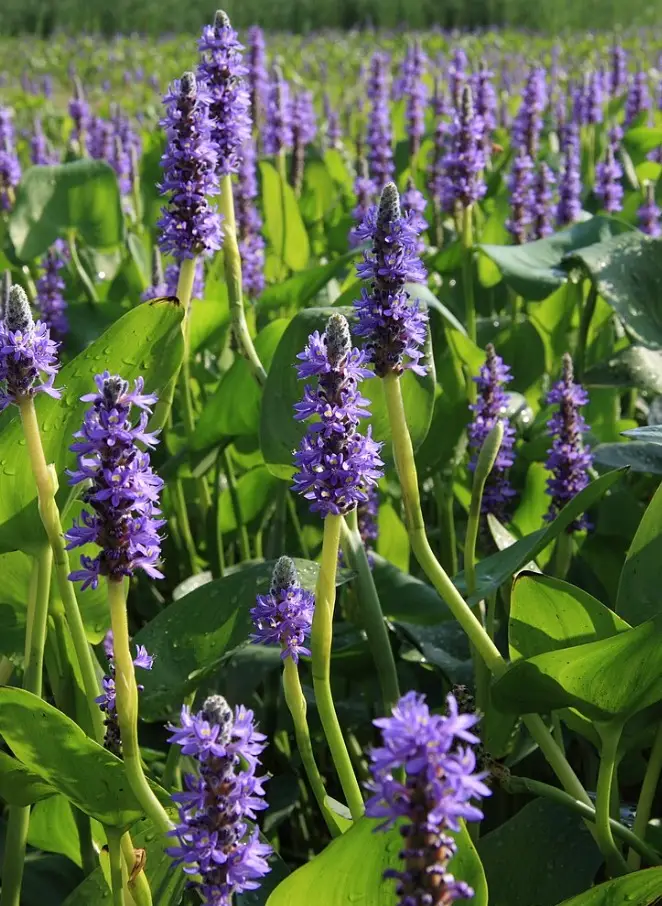
One of the major new features of the renovated garden will be the presence of water, with a stream running through the upper garden and flowing into the pool, while a jet will animate the central niche of the nymphaeum. This new feature will create areas in various places that are suitable for the gradual introduction of aquatic plants.
Lower garden
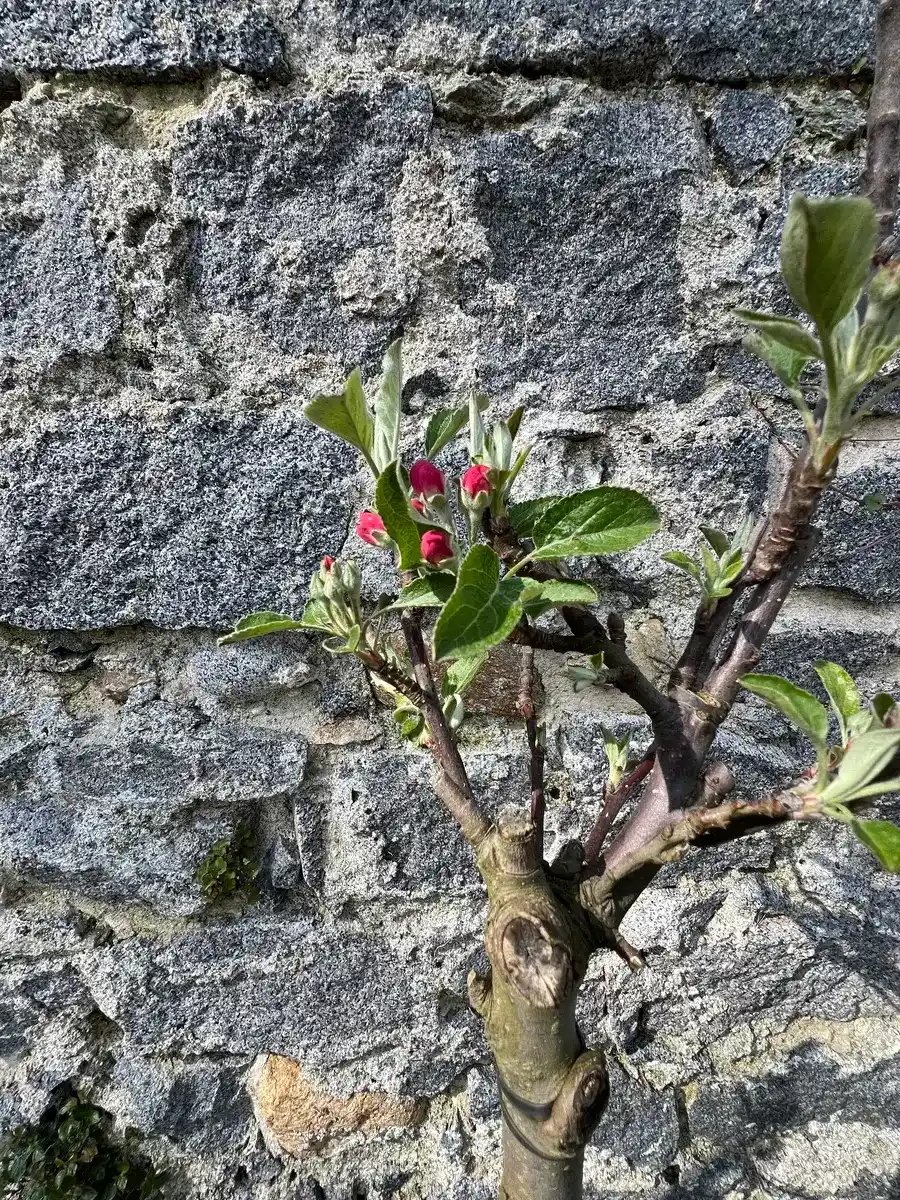
There have never been any flowers in this part of the garden, so the introduction of espalier fruit trees and perennials on the high walls is a major innovation. Both will grow gradually, so the effect of this new planting will become apparent over the next few years.
The first two ramps leading down towards Biella are particularly wide and bordered by a low wall that allows visitors to observe the landscape, while the last ones are bordered by a boxwood hedge that gradually narrows the view, accompanying visitors to the exit on Costa San Sebastiano.
Espalier fruit trees
In Italian gardens, fruit trees were often arranged in geometric patterns. In our garden, their espalier arrangement creates a harmonious rhythm on the large stone walls, contrasting with the softer, irregular shapes of the perennial flowerbed at the base.
Perennial herbaceous plants
The iris, the flower that inspired the lily symbol of Florence, was chosen for our garden as a tribute to this tradition. As a family with roots in both Florence and Piedmont, we planted many irises in the past, and today, in the new layout, they will accompany the path leading to the nymphaeum.
To enhance the width of the first two ramps, we have introduced a new element: English borders of perennial plants.